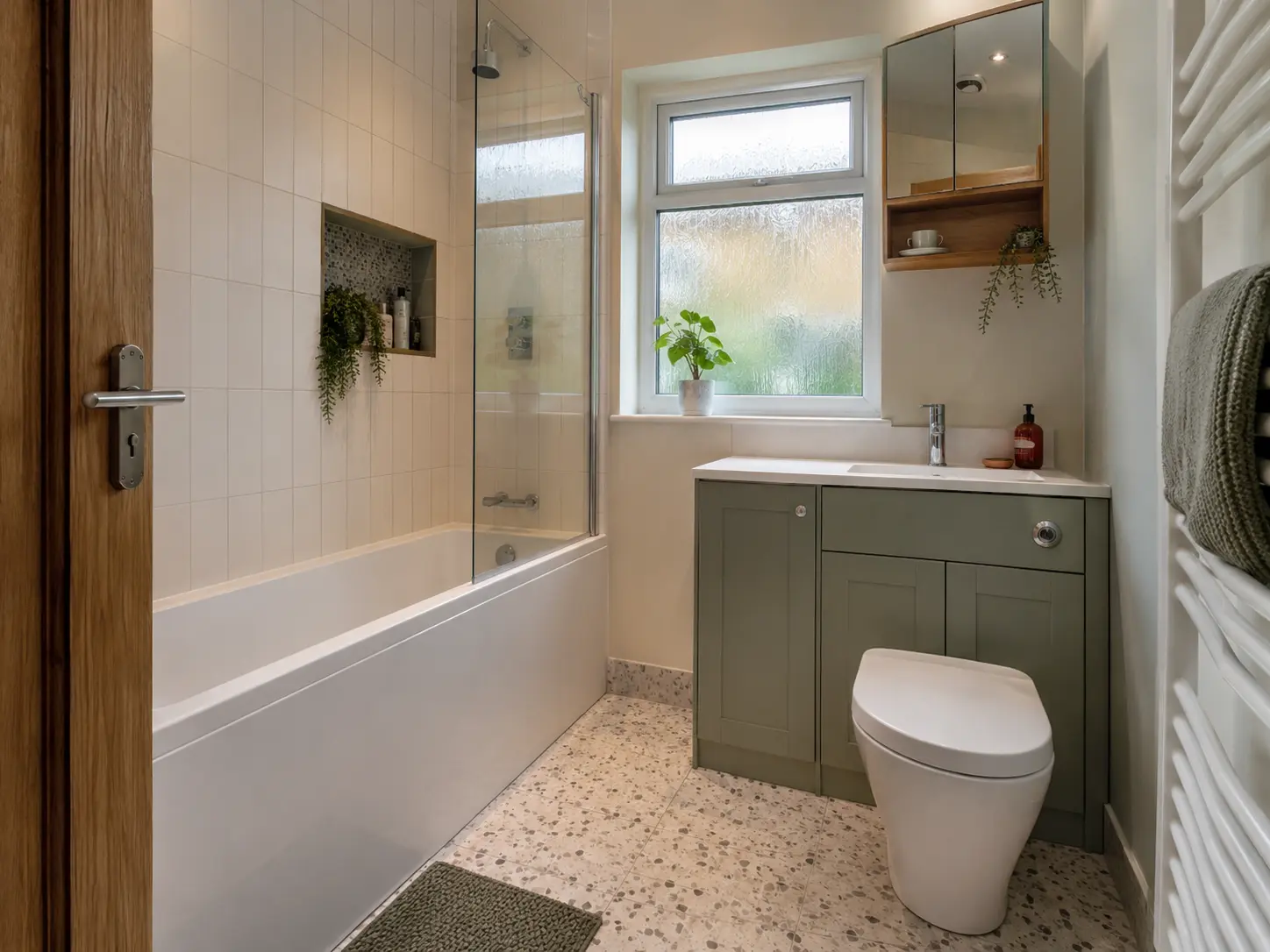
A New Bathroom Still Needs Somewhere for Moisture to Go
New tiles and furniture can make a room look finished, but they do not remove shower steam. Moist air needs an effective route outside. This matters in every home and is especially noticeable in compact or internal bathrooms where there is no open window. Ventilation should be part of the first survey, not a small electrical choice made after the layout is finished.
Why Condensation Appears
Warm moist air turns into water when it reaches a colder surface. You may see it first on mirrors, windows, outside walls, ceilings or around a cold toilet cistern. Some condensation after a shower is normal. Persistent wet surfaces, peeling paint, black spotting or a musty smell suggest the room is not drying quickly enough or there may be another moisture problem to investigate.
The Fan and Duct Must Work Together
Fan performance can fall when air travels through a long duct with several bends. Flexible ducting can also sag and collect moisture if it is installed badly. The right plan considers the room size, duct route, outside grille and how long the fan continues after use. Where the route is difficult, an inline fan or a different termination point may be more suitable.
The Room Also Needs Replacement Air
An extractor cannot move air well if the bathroom is sealed tight. There needs to be a way for drier air to enter, often through a suitable gap below the door or another designed transfer path. This does not mean leaving the bathroom cold. It means creating a controlled route: drier air in, moist air out.
Heating Helps the Room Dry
A bathroom that stays very cold is more likely to collect condensation on its surfaces. A properly sized radiator or towel rail can help, but it should not block storage or reduce safe movement. Underfloor heating can improve comfort and drying, although it does not replace ventilation. The best result combines steady warmth, extraction and surfaces that are easy to wipe.
Older Dundee Homes Need Careful Routes
In a stone tenement or period villa, the nearest outside wall may not be beside the bathroom. The duct route may need to pass through a ceiling void or existing opening, and work affecting historic fabric needs extra thought. Dundee also has many listed buildings and conservation areas. If the proposal changes protected features or the outside appearance, check what consent is needed before drilling or adding a grille.
What to Ask During the Bathroom Survey
Ask where the fan will discharge, how the duct will run, how replacement air will enter and whether the controls will keep the fan running after a shower. Mention any existing mould or damp rather than decorating over it. A bathroom fitter can improve ventilation, but leaks, penetrating damp or wider building faults may need separate investigation.