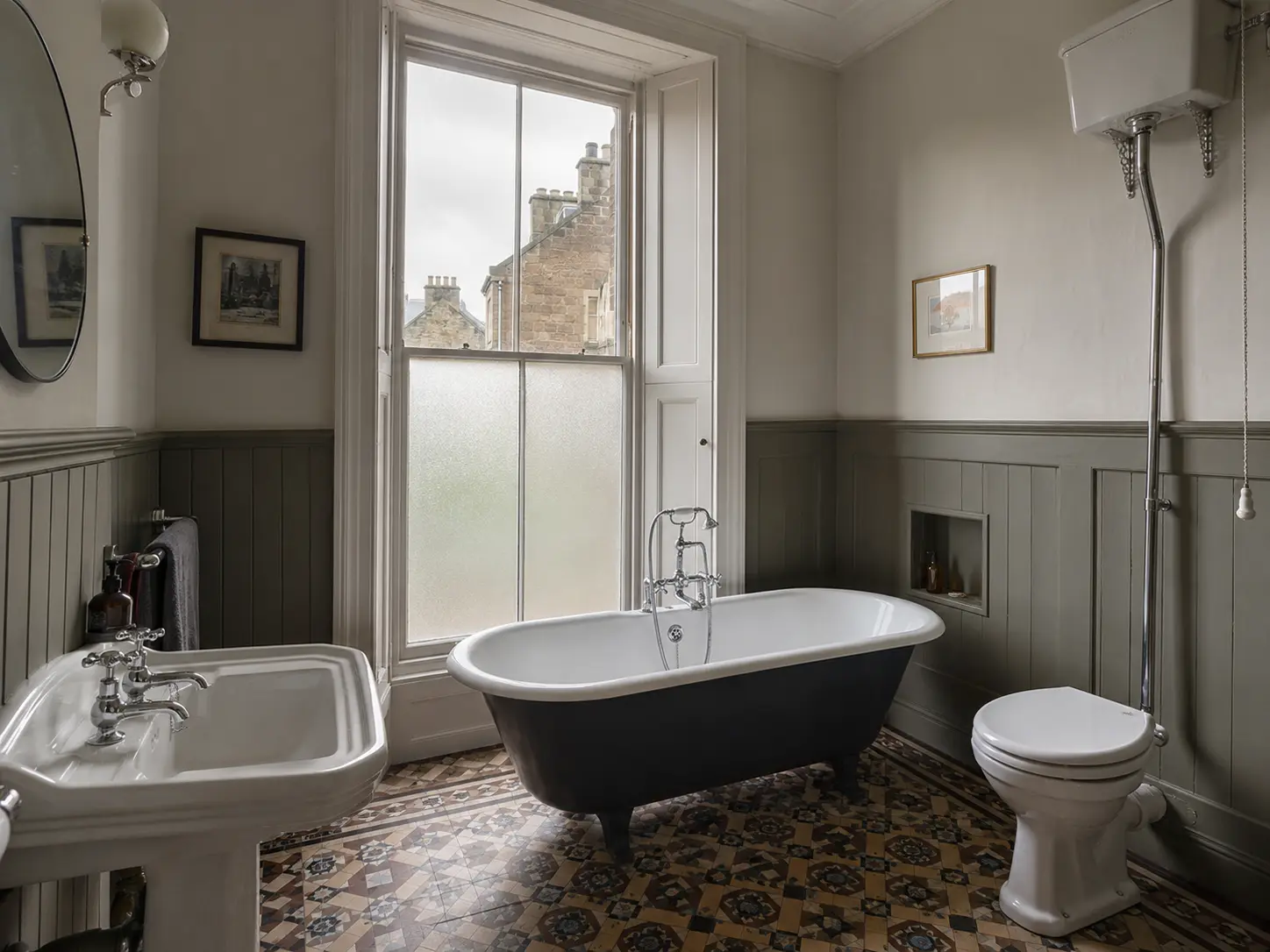
First Check Whether the Building Is Listed
Dundee City Council says there are around 900 listed buildings in the city council area. Listing is different from simply being inside a conservation area, and it can cover the interior, exterior and fixtures that contribute to the building's character. Check the official record and speak to the council if the planned bathroom work could affect historic fabric.
A Bathroom Refit Is Not Automatically a Planning Application
Replacing sanitaryware and finishes within an existing bathroom is not the same as removing original panelling, cutting through historic masonry or changing an external wall. The need for consent depends on the building and the proposed work. Do not let this put you off, but do not rely on a general rule from another property either.
Keep New Pipe Routes Reversible Where Possible
A good period-property design avoids unnecessary damage. Existing service routes, cupboards and later partitions may provide places for new pipes and ducts. Surface boxing can sometimes be designed as neat furniture rather than chasing deeply into old walls. The right solution balances appearance, maintenance access and the significance of the original fabric.
Prepare Old Walls Without Trapping Moisture
Traditional solid walls behave differently from modern cavity walls. A bathroom still needs dependable waterproofing in wet zones, but preparation should respond to the actual wall construction and condition. Loose plaster, salts or signs of damp should be understood before they are covered. Where specialist conservation advice is needed, include it early in the project.
Choose a Style That Belongs in the House
A traditional bathroom does not need to look like a museum. Shaker furniture, simple chrome or brass finishes, restrained panelling and a well-proportioned basin can sit comfortably beside modern waterproofing, efficient lighting and a good shower. The aim is a room that respects the property without giving up everyday comfort.
External Vents and New Openings Need Care
Bathroom fans, soil pipes and new windows can affect the outside appearance. In a conservation area or listed building, their position, colour and visibility may matter. Dundee City Council advises that controls are stronger in conservation areas and that listed building alterations affecting character require consent. Confirm the route before products and trades are booked.
Build the Right Team and Paper Trail
Photograph existing features, write down the proposed changes and keep product and layout information together. Where consent is needed, obtain it before work starts. Use installers who understand older buildings, and bring in an architect, surveyor or conservation specialist when the work goes beyond a straightforward refit. Clear records protect the property and make later maintenance easier.